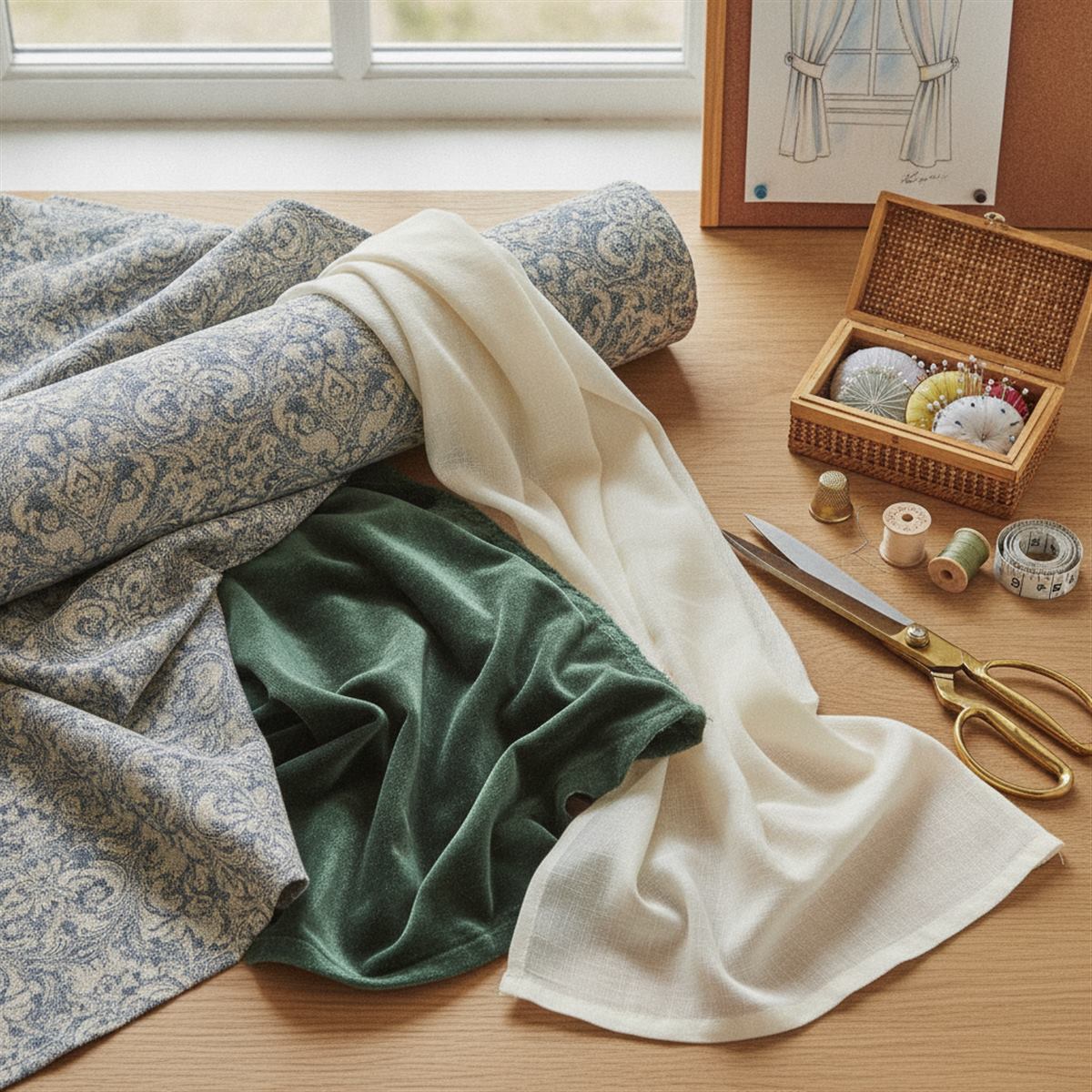
Choosing Curtain Fabric Without the Guesswork
Making your own curtains is one of the most satisfying home sewing projects, and one of the best ways to save money on soft furnishings. The fabric you choose decides how your curtains hang, how much light they block, how warm the room feels and how long they last. This guide walks through the best fabrics for curtains and how to work out how much you need.
Start With What the Curtains Need to Do
Before you fall in love with a print, ask what the room needs:
- Bedroom or nursery: blocking light matters most, so plan for blackout lining.
- Living room: drape, colour and insulation are usually the priority.
- Kitchen or bathroom: lighter, easy-wash fabrics that won't hold steam or smells.
- Period or statement windows: heavier weaves such as tapestry or velvet give a luxurious finish.
The Best Fabrics for Curtains
Furnishing and Upholstery Fabric
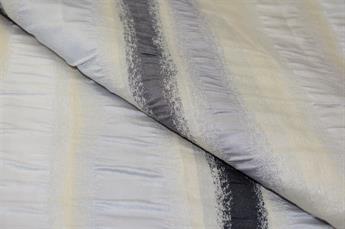
Purpose-made furnishing fabrics are woven to hang well and wear hard. Ours are around 148cm wide, which gives you plenty of width per drop, and many are also suitable for cushions, headboards and chairs, so you can match your curtains to the rest of the room. Browse our furnishing and upholstery fabric.
Cotton and Linen-Look Fabrics
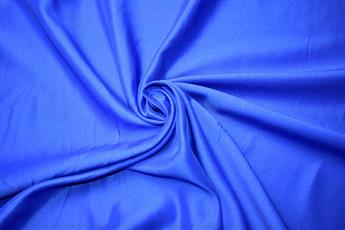
For a relaxed, natural look, linen-look cottons are a great choice. Our designer linen-look plains are around 140cm wide and roughly 210gsm, heavy enough to hang nicely while still letting soft light through. They suit living rooms, kitchens and Roman blinds. See our linen fabrics.
Tapestry Fabric
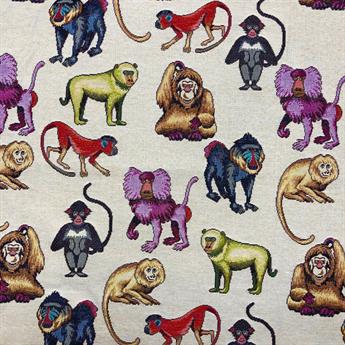
If you want curtains with real weight and character, tapestry is hard to beat. Our cotton-rich tapestry fabrics are around 360gsm at 140cm wide. That weight helps them hang in deep, even folds and adds a layer of warmth to draughty rooms. Explore our tapestry fabrics.
Velvet
Velvet brings a rich colour and a soft sheen that catches the light beautifully. It's ideal for formal living rooms and bedrooms, and its dense pile helps with insulation. Take a look at our velvet fabrics.
Lightweight Fabrics for Sheers and Cafe Curtains
Voiles, muslins and lightweight cottons soften daylight rather than block it. They're perfect for layering behind heavier curtains or for small kitchen and bathroom windows. See our muslin and voile.
Why Lining Makes Such a Difference
Lining is the secret to curtains that look professionally made. It protects the main fabric from sun fading, adds body so the curtains hang better, and improves insulation.
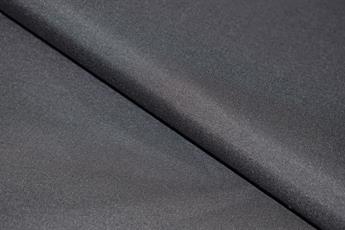
- Blackout lining: blocks light for bedrooms, nurseries and home cinemas. Our thermal blackout lining is 100% polyester, around 260–280gsm and 140cm wide.
- Dim-out fabric: reduces rather than fully blocks light. Ours is 160cm wide.
Find both in our blackout and dim-out fabrics.
How Much Curtain Fabric Do You Need?
Here's a simple way to estimate. Always measure your own window carefully, and check your heading tape or pattern instructions.
- Measure the track or pole width (not the window).
- Multiply by the fullness your heading needs. As a rough guide, allow about 2 times the track width for most gathered and pencil pleat headings, or around 1.5 times for a flatter look.
- Divide by the fabric width and round up. This gives the number of fabric widths (drops) you need across both curtains.
- Work out each cut length: the finished drop plus about 25–30cm for the top heading and bottom hem.
- Multiply the number of widths by the cut length.
Example: a 150cm track at 2 times fullness needs 300cm of fabric across. With 140cm-wide fabric, that's 300 ÷ 140 = 2.1, so 3 widths. For a 160cm finished drop, each cut is about 190cm. Three cuts of 190cm = 5.7m, so you'd buy 6 metres. With a large repeating pattern, add one extra pattern repeat per width so the design lines up across both curtains.
Your lining is calculated the same way, usually a little shorter than the main fabric.
Finishing Touches
Don't forget curtain heading tape, strong thread and weights for a neat hem. You'll find these in our home sewing and décor section.
Ready to Make Your Curtains?
For a bedroom, pair a furnishing fabric or velvet with blackout lining. For a bright living space, try a linen-look cotton. For a cosy, traditional feel, tapestry is a lovely choice. Explore our full home and furnishing fabrics to find the right fabric for every room.
Ready to start your project?
Shop Fabrics →