
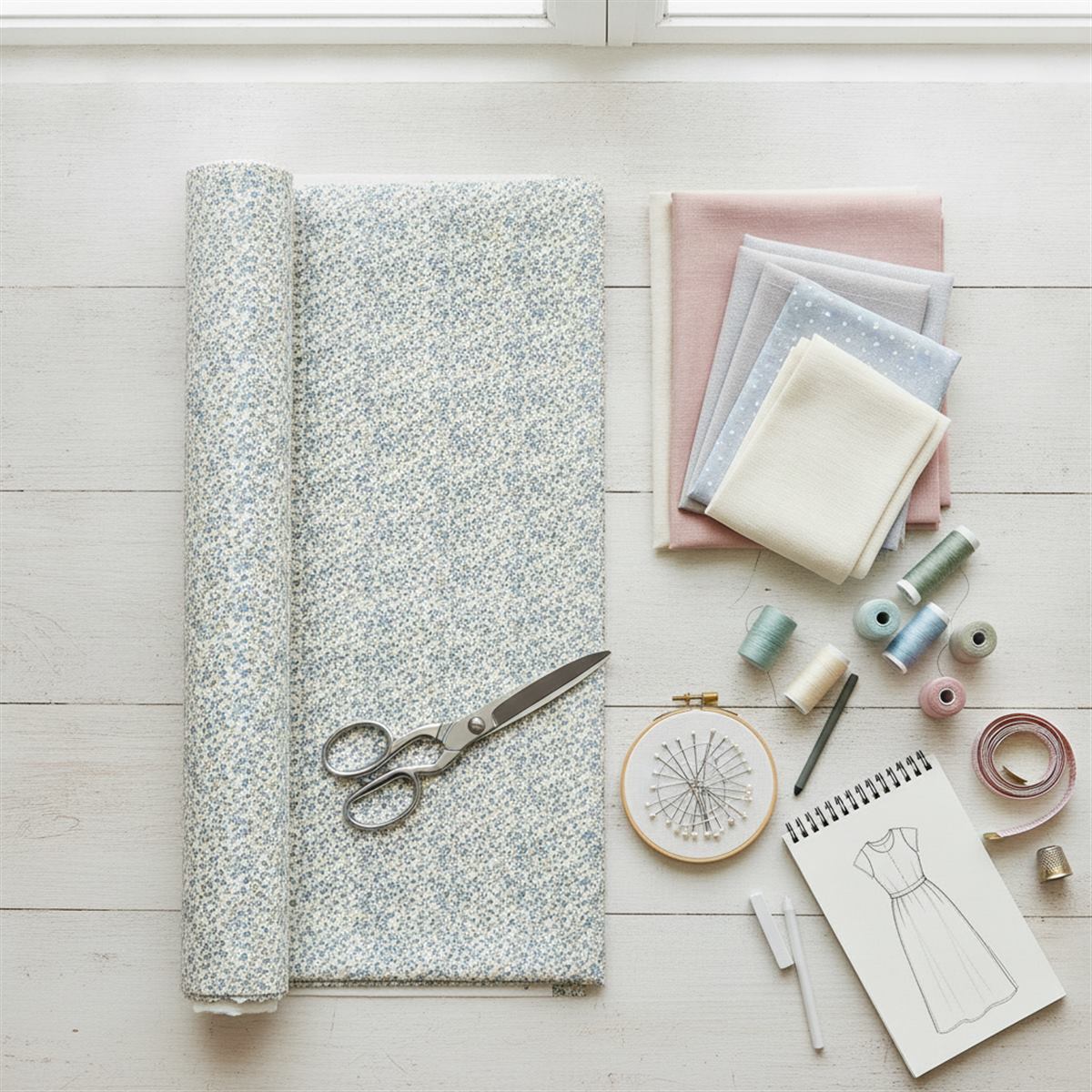
Starting Your Sewing Journey
Taking your first steps into dressmaking is an exciting milestone. There is nothing quite like the feeling of wearing a garment you stitched yourself from a piece of beautiful fabric. However, walking into a fabric shop or browsing fabric by the metre online can feel overwhelming when you are a complete beginner. With hundreds of weaves, weights, and prints available, how do you know which dress fabric will set you up for success?
Choosing the wrong material for your first project can lead to frustration, slipped stitches, and wonky seams. By picking a beginner-friendly fabric, you will enjoy a smooth sewing experience and end up with a finished garment you love. Here is your ultimate guide to selecting the right fabric for your first dressmaking project.
What Makes a Fabric Beginner-Friendly?
When you are learning how to control your sewing machine, maintain consistent seam allowances, and press your seams, your fabric should work with you, not against you. Look for fabrics with the following qualities:
- Woven, not knit: Woven fabrics have very little stretch, making them much easier to pin, cut, and stitch without distortion.
- Medium weight: Ultra-light fabrics like chiffon tend to get sucked down into the needle plate, while heavy canvas can strain standard domestic sewing machine needles. A medium-weight fabric is the sweet spot.
- Low slip factor: Smooth, slippery materials like satin slip around under the presser foot. Textured or matt fabrics stay put.
- Easy to press: Natural fibres like cotton and linen take a crisp press with an iron, which makes crisp corners and neat hems far easier to achieve.
The 4 Best Fabrics for Beginner Dressmakers
1. 100% Cotton Poplin
Cotton poplin is widely considered the gold standard for beginner sewing. It is stable, smooth, easy to cut, and doesn't stretch out of shape. Cotton poplin comes in an incredible variety of solid colours and fun prints, making it perfect for simple pyjama bottoms, basic shift dresses, or simple button-front tops.
2. Linen & Linen Blends
Linen has a relaxed, luxurious feel and is wonderfully breathable. Pure linen can crease easily, so a cotton-linen or viscose-linen blend is often ideal for beginners. It offers the stability of cotton alongside a softer drape, perfect for easy-breezy summer dresses, aprons, and elastic-waist trousers.
3. Chambray
If you love the classic look of denim but want something easier to sew, chambray is your best friend. It is a lightweight woven cotton that looks like soft denim, making it ideal for pinafore dresses, casual shirts, and simple skirts.
4. Cotton Lawn
For projects requiring a lighter, softer touch—such as a gathered skirt or a breezy summer blouse—cotton lawn is a brilliant choice. While slightly finer than cotton poplin, it remains remarkably stable under the sewing machine foot and presses beautifully.
Fabrics to Avoid on Your First Project
To keep your confidence high, it is best to save certain trickier fabrics for when you have a few projects under your belt. Try to avoid:
- Jersey and Knit Fabrics: Stretch fabrics require special needles (ballpoint) and stretch stitches, which can be tricky for absolute beginners.
- Satin and Silk: These slide off the cutting table and snag easily.
- Rayon / Viscose Singles: While lovely and floaty, light viscose can be extremely slippery and shifty to cut accurately.
- Velvet and Corduroy: Fabrics with a nap (directional pile) require careful layout and specialist handling.
Top Tips Before You Start Cutting
Once you have selected your perfect fabric by the metre, keep these final tips in mind:
Always pre-wash your fabric: Natural fibres like cotton and linen shrink on their first wash. Wash and dry your fabric using the same settings you plan to use for the finished garment before you cut out your pattern pieces.
Check the fabric width: Dressmaking patterns state how much fabric you need based on standard widths (usually 112cm/44" or 140cm-150cm/55"-60"). Make sure you buy enough length for your chosen width!
With the right woven cotton or linen blend in hand, you are ready to tackle your very first dressmaking pattern with confidence. Happy sewing!
Ready to start your project?
Shop Fabrics →